
Predicting Wave Runup on Dam Slopes
URS Corp., July, 2013
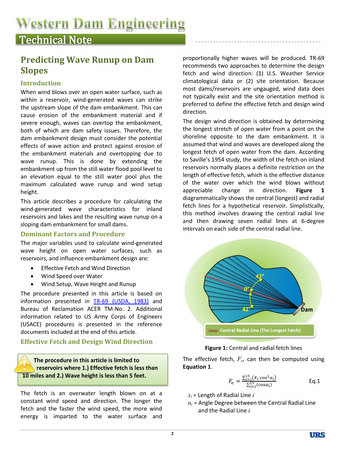
Predicting Wave Runup on Dam Slopes” presents a practical methodology for estimating wind-generated wave characteristics and resulting wave runup on upstream embankment slopes of dams. Wind-driven waves can erode embankment materials and, under extreme conditions, lead to overtopping of the dam crest. Proper estimation of wave height, wind setup, and wave runup is therefore essential for determining required freeboard and for designing upstream slope protection on small embankment dams.
The article identifies three dominant factors controlling wave generation and runup: effective fetch and wind direction, wind speed over water, and the resulting wind setup, wave height, and wave runup. The procedures outlined are primarily based on USDA Technical Release No. 69 and Bureau of Reclamation guidance and are generally applicable to inland reservoirs with effective fetch lengths less than 10 miles and significant wave heights less than 5 feet.
Effective fetch is defined as the distance over which wind blows across the water surface without significant change in direction. Because most small reservoirs lack detailed wind records, the article recommends a site-orientation method for determining design wind direction and effective fetch by identifying the longest uninterrupted water surface upwind of the dam. This approach accounts for reservoir geometry and limits the influence of unusually long but narrow fetch paths.
Design wind speed may be estimated using a conservative constant wind speed or a more refined, site-specific approach based on NOAA fastest-mile wind data and wind duration considerations. The article explains how wind duration requirements vary with fetch length and how overland wind speeds should be adjusted to account for higher overwater wind speeds. These steps allow determination of an appropriate design overwater wind speed for wave calculations.
Using the selected wind speed and effective fetch, the article presents empirical relationships for estimating wind setup, significant wave height, and wavelength. Significant wave height is defined as the average height of the highest one-third of waves and serves as the basis for slope protection design. The article notes that larger design wave heights may be selected to reflect lower probabilities of exceedance where additional conservatism is warranted.
Wave runup is defined as the vertical distance that waves travel up the embankment slope above the storm water level. The runup height depends on wave characteristics, embankment slope, and surface roughness. The article provides equations for estimating wave runup on riprap-protected slopes and emphasizes that steeper slopes generally result in higher runup. The sum of wind setup and wave runup determines the required vertical extent of freeboard above the still water flood pool elevation.
The article concludes that wind-generated wave action must be explicitly considered when designing embankment crest elevations and upstream slope protection. The methods presented offer a straightforward and conservative approach suitable for small dams and form the basis for subsequent design of riprap or other slope armoring systems.
This article was published in Vol. 1, Iss. 2 (July 2013) of Western Dam Engineering News and describes procedures for predicting wind-generated waves, wind setup, and wave runup on embankment dam slopes. Western Dam Engineering News is a collaborative effort between the States of Colorado, Montana, New Mexico, and Wyoming and is funded by the FEMA National Dam Safety Act Assistance to States grant program. Special thanks to URS Corporation in Denver, Colorado for authoring the article.
Revision ID: 8332
Revision Date: 02/02/2026