Model State Dam Safety Program (FEMA P-316): Difference between revisions
(I think the info about ASDSO can be deleted from here. I started adding a section in the State Dam Safety Regulatory Program with some of this info. I have not finish that yet.) |
No edit summary |
||
| Line 23: | Line 23: | ||
The target audience for this document includes state dam safety program managers, their management, and legislators, with dam owners, engineers, and dam safety staff as a secondary audience. | The target audience for this document includes state dam safety program managers, their management, and legislators, with dam owners, engineers, and dam safety staff as a secondary audience. | ||
|versions= | |versions= | ||
Latest revision as of 16:48, 29 January 2026
Federal Emergency Management Agency, 2022
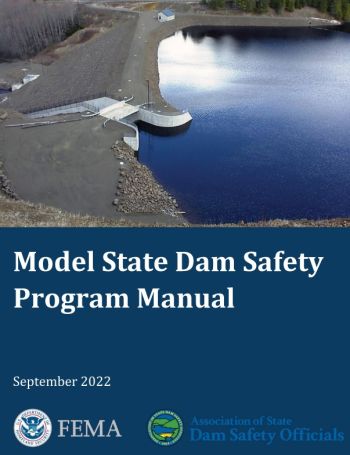
The overall purpose of the Model State Dam Safety Program (Model Program) is to enhance national dam safety. The objective is to encourage progressive safety standards in the promulgated practices and procedures state agencies use to regulate dam site investigation, design, construction, operation and maintenance, and emergency planning and preparedness. The Model Program is meant to outline the key components of an effective state dam safety program. It does not mirror any state program, nor does it supplant any state's existing criteria. It is intended to provide guidance on the development of more effective and sustainable state programs that will mitigate major risks facing dams across the nation. The Model Program is a collaborative effort between the Association of State Dam Safety Officials (ASDSO) and the Federal Emergency Management Agency (FEMA) National Dam Safety Program. The Model Program supports ASDSO’s mission to improve the
condition and safety of dams through education, support state dam safety programs, and foster a unified dam safety community.
The target audience for this document includes state dam safety program managers, their management, and legislators, with dam owners, engineers, and dam safety staff as a secondary audience.
Revision ID: 8334
Revision Date: 01/29/2026